
 somaiya.edu
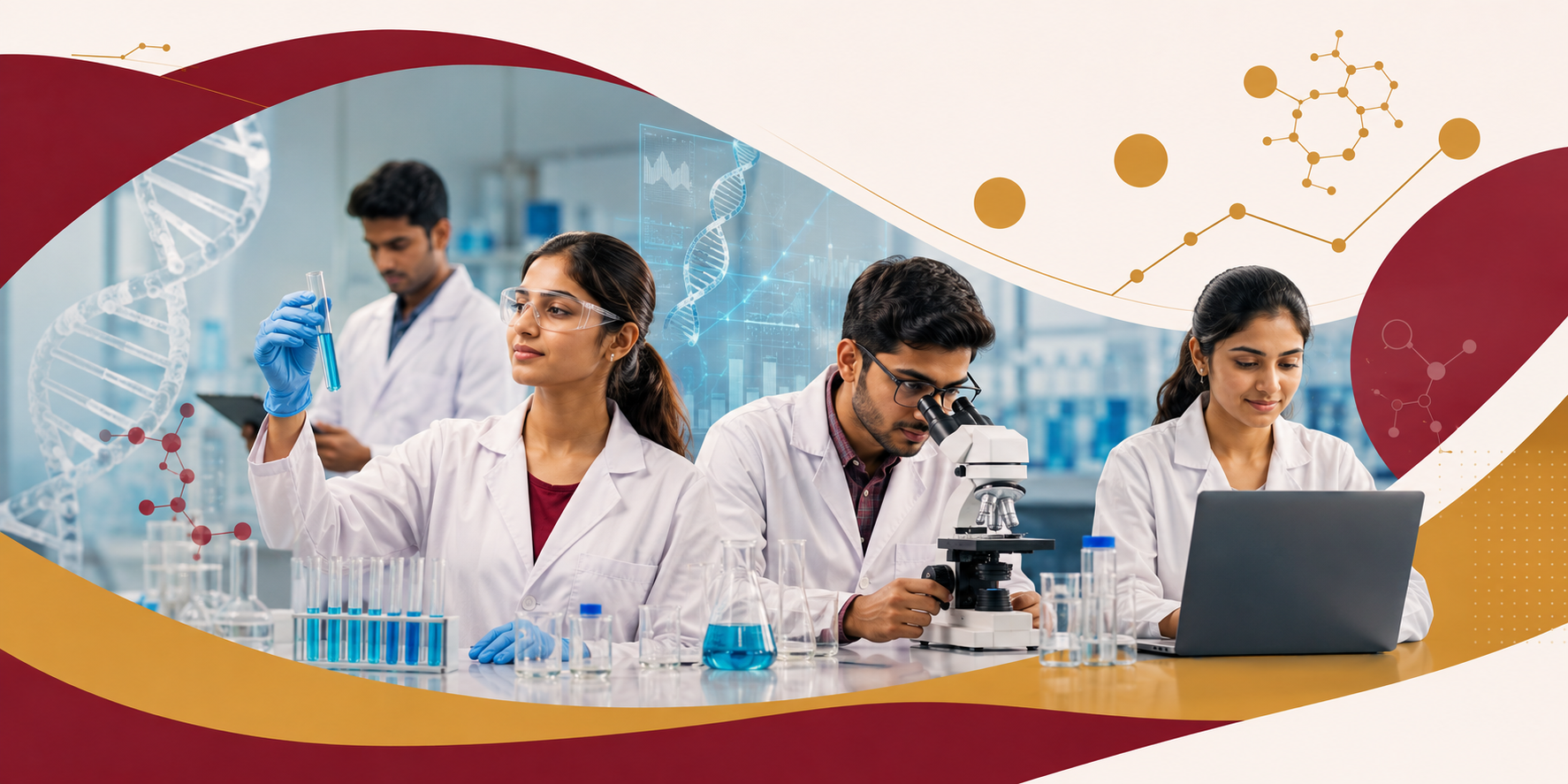


Choosing between a BSc and an Integrated BS-MS in Science can shape your academic journey and future career. While a BSc offers a strong foundation in science, an Integrated BS-MS programme provides continuous learning, early research exposure, interdisciplinary education, and advanced career opportunities in research, biotechnology, healthcare, environmental science, and emerging technologies. In this guide, discover the 7 key benefits of choosing a BS-MS over a BSc, compare both programmes, and learn how the Somaiya School of Basic and Applied Sciences prepares students with the knowledge, practical experience, and research skills needed to excel in science-driven careers.
Choosing the right undergraduate science programme is one of the most important decisions for students after Class 12. While a Bachelor of Science (BSc) remains a popular choice, an Integrated BS-MS in Science has emerged as a preferred option for students who aspire to build careers in research, innovation, biotechnology, artificial intelligence, healthcare, environmental science, and advanced scientific studies.
Unlike a traditional BSc programme that ends after three years, an Integrated BS-MS in Science combines undergraduate and postgraduate education into a single, structured five-year programme. It offers greater academic continuity, stronger research exposure, and better preparation for higher studies and industry roles.
At the Somaiya School of Basic and Applied Sciences, students pursuing the Integrated BS-MS in Science benefit from interdisciplinary learning, practical laboratory experience, research-based projects, and mentorship from experienced faculty. The programme is designed to develop scientific thinking while preparing students for future-ready careers in academia, research, and industry.
If you are wondering whether you should choose a BSc or an Integrated BS-MS programme, this guide will help you understand why many students are opting for the latter.
| Feature | Integrated BS-MS in Science | BSc |
| Duration | 5 Years | 3 Years |
| Degree Awarded | BS + MS | BSc |
| Research Exposure | Begins from early semesters | Usually limited until postgraduate studies |
| Academic Continuity | Continuous programme | Separate admission required for MSc |
| Practical Learning | Extensive laboratory work and research projects | Practical sessions with comparatively limited research |
| Career Readiness | Research and industry focused | Suitable for entry-level roles or further education |
| Higher Education | Strong foundation for PhD and global universities | MSc generally required before research pathways |
An Integrated BS-MS in Science is a dual-degree programme that combines a bachelor's and master's education into one continuous academic journey. Instead of completing a BSc and later applying separately for an MSc, students complete both qualifications through a single curriculum that gradually progresses from fundamental science to advanced research and specialization.
Throughout the programme, students study subjects such as Biology, Chemistry, Physics, Mathematics, Data Science, Artificial Intelligence, Sustainability, and Scientific Communication while participating in laboratory work, research projects, and interdisciplinary learning.
This approach enables students to build stronger conceptual understanding while developing analytical, technical, and research skills much earlier than conventional degree pathways.
One of the biggest advantages of pursuing an Integrated BS-MS in Science is the opportunity to participate in research from the beginning of the programme. While BSc students generally focus on classroom learning during their undergraduate years, BS-MS students are introduced to scientific investigations, laboratory experiments, research methodologies, and data analysis much earlier.
At the Somaiya School of Basic and Applied Sciences, students participate in laboratory-based learning, scientific projects, workshops, and faculty-guided research activities that help them understand how scientific discoveries are made and applied in real-world scenarios. This early exposure builds confidence and prepares students for research-intensive careers. If you're a student who thrives on inquiry and discovery, it's worth exploring why the BS-MS programme is ideal for research-oriented students.
Students pursuing a traditional BSc often need to prepare for entrance examinations, applications, and admissions to secure a place in a master's programme. This process can interrupt academic momentum and delay specialization.
An Integrated BS-MS programme eliminates this challenge by offering a seamless five-year academic pathway. Students continue their education without worrying about changing institutions, adapting to new curricula, or competing for postgraduate admissions. This allows students to focus entirely on learning, research, and skill development.
Scientific research today rarely exists within a single discipline. Healthcare integrates biology with artificial intelligence, environmental science relies on data analytics, and biotechnology combines chemistry, genetics, and computational science.
The Integrated BS-MS in Science equips students with knowledge across multiple scientific disciplines before allowing them to specialize. This interdisciplinary approach helps students understand complex scientific problems from different perspectives and prepares them for emerging careers that demand cross-functional expertise.
Students at the Somaiya School of Basic and Applied Sciences benefit from a curriculum that combines core sciences with modern subjects such as Artificial Intelligence, Machine Learning, Sustainability, Innovation Management, and Scientific Communication.
Research experience plays a vital role in both higher education and industry recruitment. Students enrolled in an Integrated BS-MS programme typically undertake research assignments, scientific publications, internships, laboratory projects, and collaborative work with researchers throughout the programme.
Such opportunities strengthen scientific thinking while helping students build an impressive academic profile for PhD programmes, fellowships, international universities, and research organizations.
Research-based learning also develops problem-solving abilities, observation skills, experimental design, critical analysis, and scientific writing qualities highly valued by employers worldwide.
While a BSc graduate often begins with entry-level opportunities or chooses further education, an Integrated BS-MS graduate enters the workforce with advanced qualifications, practical exposure, and research experience.
Graduates can pursue careers in:
Because students graduate with both undergraduate and postgraduate qualifications, they are often considered for more specialized and higher-responsibility roles.
Students aspiring to pursue doctoral studies benefit significantly from the Integrated BS-MS structure. Since research begins early, students develop laboratory expertise, research methodology, publication experience, and scientific communication skills before completing the programme.
Many universities worldwide look for applicants who possess substantial research exposure rather than only classroom knowledge. The Integrated BS-MS programme strengthens applications for:
This makes the programme an excellent choice for students who wish to contribute to scientific discovery and innovation.
An Integrated BS-MS programme develops much more than scientific knowledge. Throughout the five-year journey, students acquire professional competencies that employers actively seek.
These include:
These transferable skills prepare graduates to succeed not only in laboratories but also in consulting, scientific communication, education, policy-making, healthcare, technology, and corporate research.
Graduates from an Integrated BS-MS in Science programme have access to diverse career opportunities across research institutions, industries, healthcare organizations, technology companies, and academia.
Research Scientists conduct experiments, analyse scientific data, develop innovative solutions, and contribute to discoveries across biotechnology, pharmaceuticals, environmental science, healthcare, and advanced materials. Salaries generally begin around ₹6–10 LPA and increase significantly with research experience.
Biotechnology professionals work in genetics, vaccine development, agriculture, healthcare, pharmaceuticals, and life sciences. With biotechnology becoming one of India's fastest-growing sectors, graduates can expect starting salaries between ₹5–9 LPA.
Scientific Data Scientists combine science with analytics, artificial intelligence, and machine learning to interpret research data and solve complex scientific problems. Professionals in this domain often earn ₹8–18 LPA, depending on specialization.
Environmental Scientists develop solutions related to climate change, sustainability, pollution control, biodiversity, and resource management. Fresh graduates generally receive ₹5–10 LPA, with opportunities in government agencies, NGOs, and multinational organizations.
Research Associates assist in drug development, clinical trials, laboratory testing, and quality assurance within pharmaceutical companies. Salaries typically range between ₹5–8 LPA initially.
Students interested in teaching and scientific research can pursue PhD programmes and eventually become professors, researchers, or academic scientists. Careers in academia also provide opportunities to lead research projects funded by national and international organizations.
The Somaiya School of Basic and Applied Sciences offers an academic environment that combines scientific excellence with practical learning and interdisciplinary research. The programme is designed to ensure that students graduate not only with theoretical knowledge but also with industry-ready skills and research experience.
Students benefit from:
This comprehensive learning ecosystem prepares students to succeed in higher education, research institutions, and rapidly evolving scientific industries.
As science becomes increasingly interdisciplinary and research-driven, students need programmes that prepare them for both today's industries and tomorrow's innovations. While a traditional BSc provides a strong academic foundation, an Integrated BS-MS in Science offers significantly greater value through continuous learning, advanced research exposure, practical skill development, and stronger career prospects.
For students passionate about discovery, innovation, and solving real-world scientific challenges, the Integrated BS-MS in Science is a future-focused academic pathway. At the Somaiya School of Basic and Applied Sciences, students receive the guidance, infrastructure, and research opportunities needed to transform scientific curiosity into meaningful careers.
If you aspire to become a researcher, innovator, scientist, or academic leader, choosing an Integrated BS-MS today could be the first step toward shaping the future of science.
If your goal is research, higher education, or specialized scientific careers, an Integrated BS-MS in Science course offers greater research exposure, academic continuity, and advanced qualifications than a traditional BSc programme.
Yes. Graduates of an Integrated BS-MS programme are well prepared for PhD programmes in India and abroad due to their strong research background and postgraduate qualification.
Graduates can become Research Scientists, Biotechnology Professionals, Environmental Scientists, Pharmaceutical Researchers, Scientific Data Scientists, Academic Researchers, or pursue doctoral studies.
The Somaiya School of Basic and Applied Sciences combines interdisciplinary learning, practical laboratory training, research projects, industry exposure, and expert faculty to prepare students for successful scientific careers.
Why Choose BS-MS Over BSc: 7 Career and Research Benefits (Somaiya 2026 Guide)

Key Advantages of Pursuing an Integrated BS-MS in Science at Somaiya Vidyavihar University

Why the BS-MS Integrated Science Program is Ideal for Research-Oriented Students?
How a B.Sc. in Biotechnology is Transforming the Future of Healthcare?
How a BSc in Biotechnology Opens Doors to Healthcare Careers

How a B.Sc. in Data Science is Shaping the Future of Business and Technology?