We are happy to answer all your admission related enquiries. Fill out the form and we will be in touch with you shortly.
We acknowledge the receipt of your enquiry. Our team will get back to you shortly.
The integrated Bachelor of Science-Master of Science (Integrated BS-MS) programme is a 5-year (10 semesters) dual degree course offering flexible curricular structures to enable creative combinations of Major and Minor disciplines of science (Mathematics, Physics, Chemistry, life sciences) along with option of getting multidisciplinary research experience in wide range fields allied to science such as in Data Science/Computer Science; Technology Management; Sustainability & Circular-Economy; Science Education; Journalism, and many more.
The vision of the programme is to prepare professionals/researchers with unique skill sets in interdisciplinary science and technology with research-based learning. This is a unique student-centric programme designed in accordance with NEP 2020 and the UGC curriculum framework (2022). The programme incorporates a fully flexible, choice-based credit system and multiple exit options, allowing learners to select their learning trajectories and choose their own paths in life according to their talents and interests.
On completion of the 4-years, a bachelor's with Honours degree in integrated science, with or without research work [Integrated BS(H) or Integrated BS(H-res)] may be obtained, or maybe continued for further one year of research based learning, leading to the postgraduate master’s degree Integrated BS-MS degree in any of the major disciplines or in general science, with specialisation in a research field.
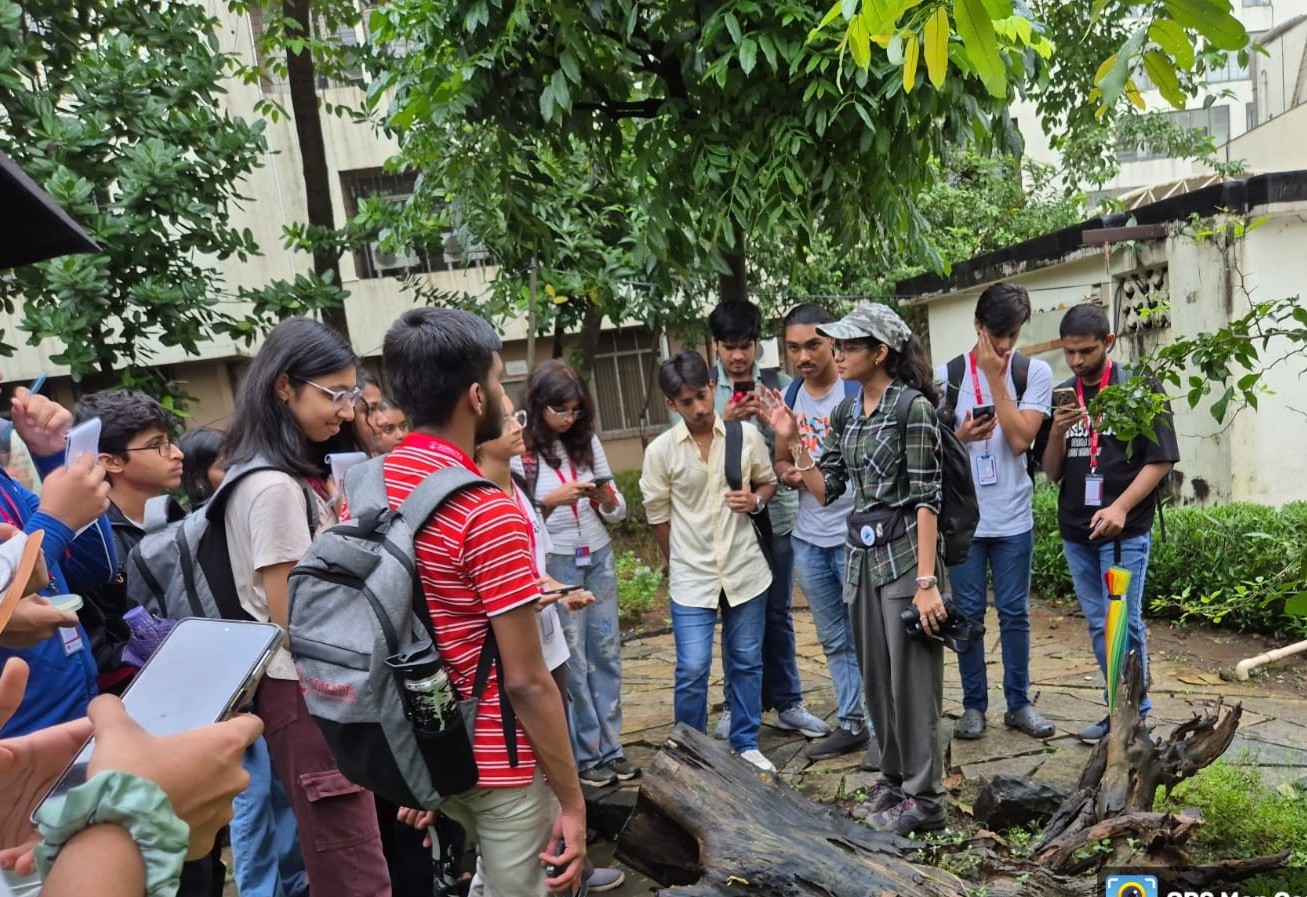
Students would be provided with opportunities for experience through internships, research projects and startup endeavours, so that they may actively engage with the practical aspects of their learning and improve their employability across the globe.
The Foundational Sciences stage, which comprises the first three semesters, provides broad-based training across the core science courses - Mathematics, Physics, Chemistry, and Life Sciences, with an emphasis on conceptual clarity, with the help of computational tools. A bridge course in mathematics will be provided to those who have not studied the subject at the high school level. This stage will also include courses for skill development, ability enhancement, and value-added courses.
The Core Learning stage, which is conducted over four semesters, enables students to pursue in-depth study in a chosen major while retaining interdisciplinary exposure through shared minor courses. An Integrated BS & MS in any of the Major disciplines:
The final Integrated Master’s stage of the programme is to be conducted in another two semesters, which will be fully based on research work, which may be conducted in any of the specialisation areas offered at the Centre or in collaboration with other departments or institutes of the University. The research work may also be performed in collaboration with an external research organisation or industrial centres, provided the work is relevant to the Major disciplines. At all stages, appropriate guidance & counselling will be provided to the students choosing their paths.
Examples of additional Areas for Research in topics allied to science are: *
*Depending on the availability of seats
The objective of the programme is to imbibe an integrated, holistic understanding of science, creating young liberal minds with problem-solving skills, zeal for learning and dedication to the growth of society. On completion of the programme, the graduates are expected to have the following capabilities:
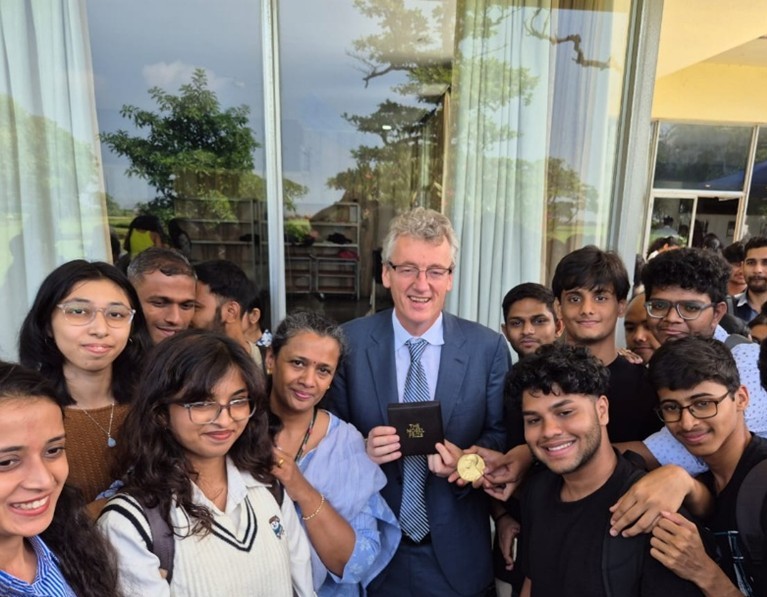
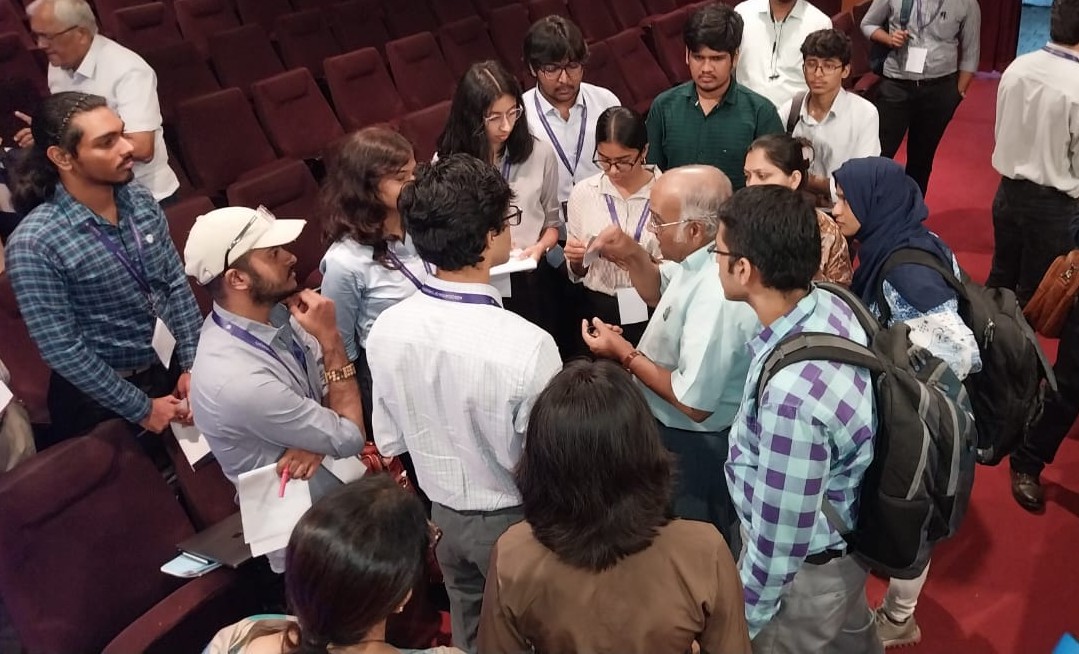
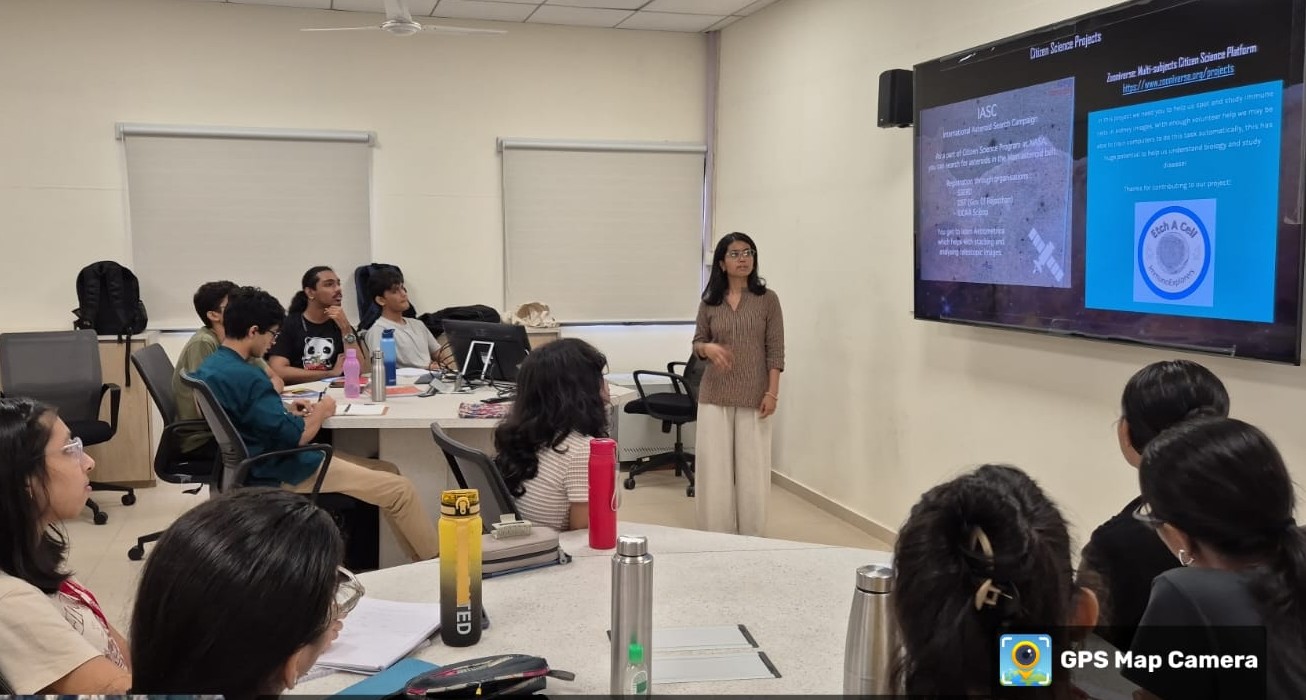
The curriculum adopts a learner-centric and multidisciplinary pedagogy that combines innovative teaching methods, project-based learning, active and collaborative learning approaches, MOOCs, hands-on exposure to emerging technologies, and interactions with subject experts and guest speakers. It extensively promotes research exposure to the national institutes, laboratories and eminent research centres. This enriching academic environment nurtures subject-specific competencies, creativity, and critical thinking. It also promotes teamwork, problem-solving abilities, and experiential learning, while providing students with valuable exposure to real-world applications and flexible approaches to execution.
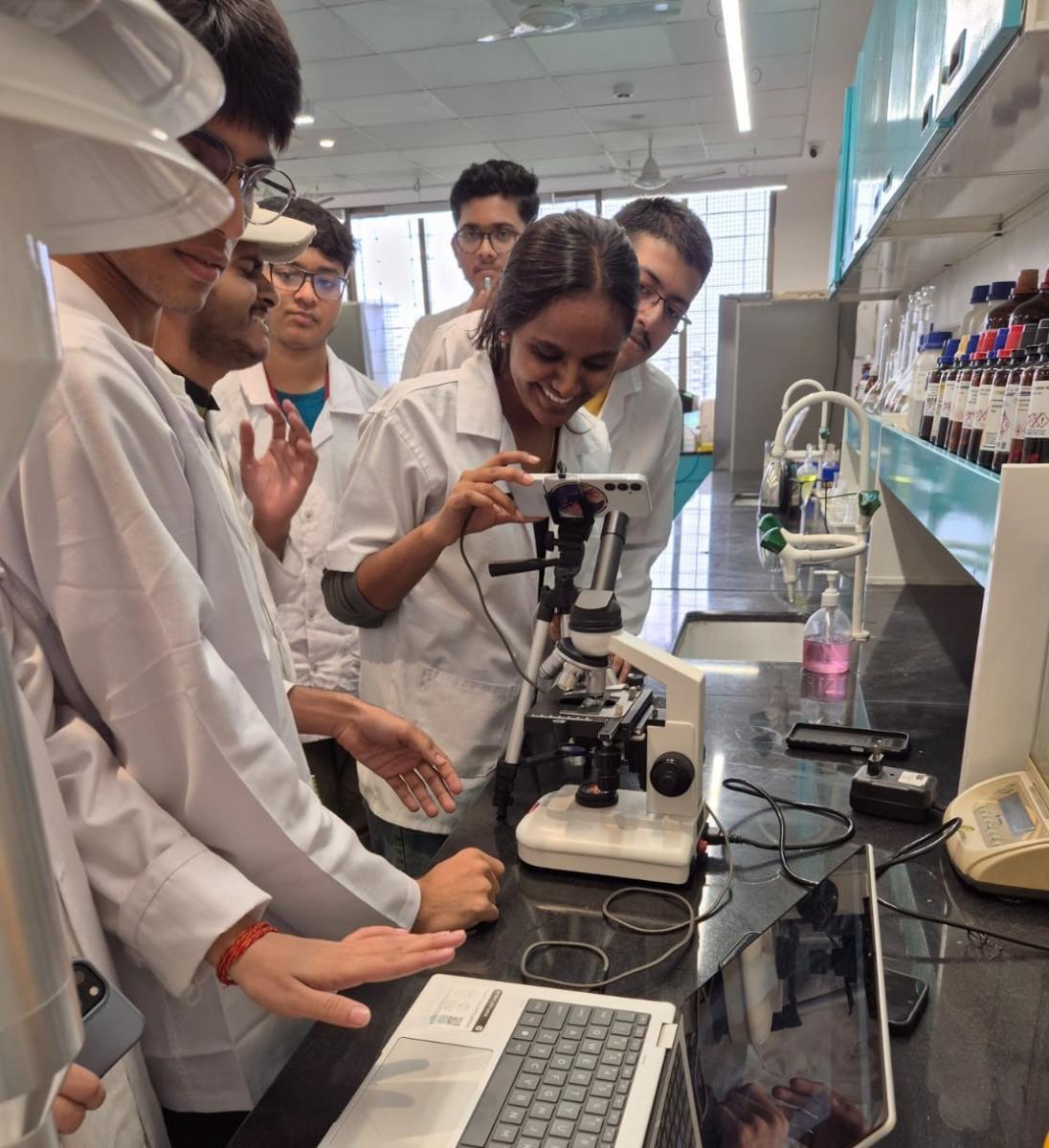
After successful completion of the programme, students can opt for their career as a professional, a researcher or an entrepreneur across the globe. With the ‘Make in India’ initiative of the Indian government, there is a huge need for science & technology professionals in the country.
Depending on the choice of major and minor disciplines, BS-MS graduates may have many job opportunities in various industrial sectors and academia, in both government and private organisations. A BS-MS graduate may work as a research professional in any of the fields listed above. With the research-based learning incorporated in the programme, the students can continue their education as researchers or PhD students anywhere in the world. The new UGC guidelines also allow talented students to embark on a PhD course after completion of the 4th year with a BS (H-Res) degree. A four-year BS(H) degree in a Major discipline may also qualify students for direct admission to an MS or MS-PhD programme abroad.
The country's industrial sectors are growing rapidly, and there will always be opportunities for young talent to take up positions in research divisions of such organisations. Apart from the private sectors, various government departments such as the Naval Academy, BARC, DRDO, NAL, ISRO, ONGC, etc., recruit science graduates for various posts needed for nation-building. The research orientation of the Integrated BS-MS programme also makes the students qualified for opportunities across the globe for higher studies or for positions in technology-driven companies. Students may also lead their final-year projects to a start-up company and become successful entrepreneurs.
| Semester I | Semester II |
|---|---|
|
Core Course (CC) |
Core Course (CC) |
|
Introductory Calculus - I |
Statistics and Probability |
|
Foundations of Classical Physics |
Foundations of Modern Physics |
|
Foundation Course in Chemistry-I |
Foundation Course in Chemistry-II |
|
Introductory Biology |
Chemistry of Life |
|
Basic Science Laboratory - I (PCB) |
Basic Science Laboratory - II (PCB) |
|
Professional Communication Skill - I |
Professional Communication Skill - II |
|
Environmental Studies |
Indian Knowledge System |
|
Introduction to Programming using Python |
Python for Science |
|
Science and Scientific Research and Development |
| Semester III | Semester IV |
|---|---|
|
Core Course (CC) |
Major Electives (Life Sciences) |
|
Biological Structure and Function |
Physiology of the human body |
|
Chemical Equilibrium and Kinetics |
Fundamentals of Genetics |
|
Quantum Mechanics, Atomic Physics and semiconductor devices |
Fundamentals of Molecular Biology(with mini project) |
|
Introduction to Linear Algebra |
Experimental Model Organisms in Biology |
|
Basic Science Laboratory III (PCB) |
Animal Physiology and Model Organisms Laboratory |
|
Computational molecular modelling |
Molecular Biology and Genetics Laboratory |
|
Environmental Science |
Major Electives (Chemistry) |
|
Basket Courses (Ability enhancement courses) |
Physical Chemistry I |
|
Inorganic Chemistry I |
|
|
Organic Chemistry I |
|
|
Analytical Chemistry Techniques with Mini Project |
|
|
Chemistry Practical I |
|
|
Major Electives (Physics) |
|
|
Waves and oscillations |
|
|
Mathematical Physics I |
|
|
Introduction to Statistical Mechanics |
|
|
Fundamentals of Thermal Physics |
|
|
Physics Laboratory IV |
|
|
Project-based Learning-I |
|
|
Major Electives (Mathematics) |
|
|
Calculus-II |
|
|
Combinatorics |
|
|
Ordinary Differential Equations |
|
|
Sampling Techniques and Statistical Inference |
|
|
Applied Mathematics for Natural Sciences -I |
|
|
Environmental Science Project |
|
|
Basket Courses (Ability enhancement courses) |
| Semester V | Semester VI |
|---|---|
|
Major Electives (Life Sciences) |
|
Microbial Biology Fundamental of Immunology Advanced Molecular Biology and (mini project II) Genetic Engineering and Bioinformatics Microbiology and Genetic engineering and Bioinformatics laboratory Molecular Biology and Immunology Laboratory |
Developmental Biology Cell Biology II Neurobiology and mini project Bioanalytical techniques Developmental and Cell Biology lab Neurobiology and Bioanalytical technology |
|
Major Electives (Chemistry) |
|
Coordination and supramolecular chemistry Organic Chemistry II Electrochemistry Polymer Chemistry with Mini Project Chemistry Practicals-III Chemistry Practicals-IV |
Quantum Chemistry Nuclear Chemistry Green Chemistry Photo and Thermal reactions and mini project Chemistry practical V Chemistry practical VI |
|
Major Electives (Physics) |
|
Fundamental Electronic and Devices Electricity and Magnetism Fundamentals of Optics Solid State Physics Physics Laboratory V Project-based Learning-I |
Mathematical Physics-2 Essentials of Quantum Mechanics Modern Computational Techniques Nuclear and Particle Physics Physics lab VI-A Project based Learning III |
|
Major Electives (Mathematics) |
|
Advanced Linear Algebra Multivariate Calculus Partial Differential Equations Discrete Structures |
Complex Analysis Group and Ring Theory Number Theory Integral Transform |
|
Applied Statistics for Natural Science |
Internal or Internship Project |
|
Basket Courses (Ability enhancement courses) |


SciSER promotes interaction with various premier institutions and SciSER faculty members also deliver many invited talks and seminars in the premier institutions in the nation and abroad and keep warm relation with the scientific community. Many of the first year BS-MS students of SciSER have taken up summer internship at IIT Bombay, TIFR, University of Hyderabad and some of the faculty members have offered internships in the Vidyavihar campus as well. 20% of the students will get scholarships and internships abroad. Partnership with Industries for augmented student learning & opportunities for placement.
We are happy to answer all your admission related enquiries. Fill out the form and we will be in touch with you shortly.
We acknowledge the receipt of your enquiry. Our team will get back to you shortly.